Anchor the action to the incident
Connect the investigation and intended response to the evidence and authorized task.
 AckuityRequest access
 USE CASE / SECURE SECURITY-OPERATIONS AGENTS
Security agents can investigate alerts and propose changes to critical systems. Verify the response action against the incident, runbook and delegated authority before it executes.
Early access. Already in paid production.
Investigate a suspicious endpoint connection.
The runbook permits isolating one endpoint. A global change requires additional authorization.
A PLAUSIBLE ACTION. A MATERIAL RISK.
The proposed scope exceeds the approved response. Obtain the required review before proceeding.
Try a context challengeThe runbook permits isolating one endpoint. A global change requires additional authorization.
HoldFROM VISIBILITY TO CONTROL
Connect the investigation and intended response to the evidence and authorized task.
Evaluate the target system, scope and delegated authority before a configuration change or remediation call.
Retain available action evidence and policy context for security-team investigation.
INSIDE ACKUITY
Execution policies can define boundaries around tool and infrastructure access. The incident-response example is illustrative.
See it with your team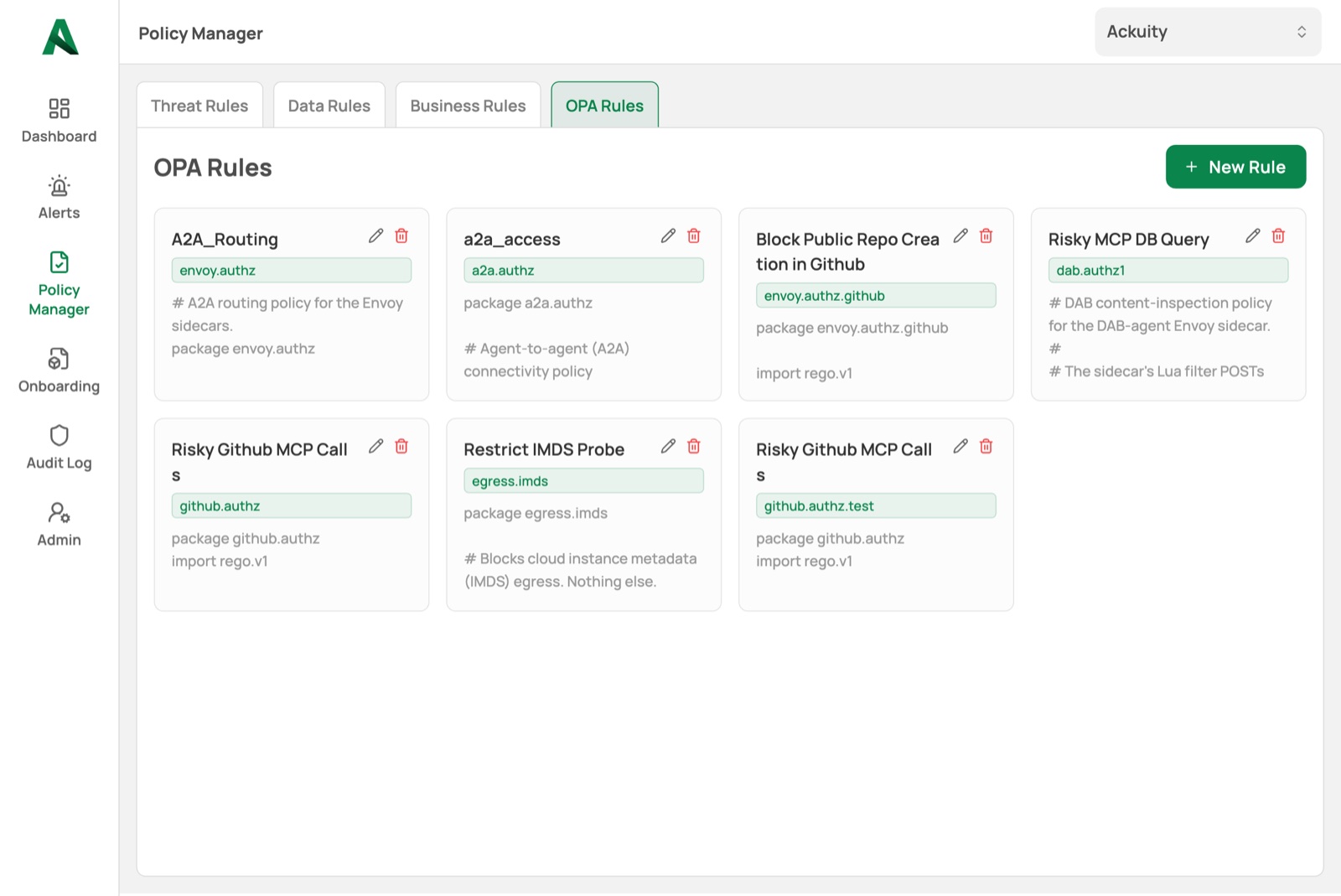
YOUR QUESTIONS, ANSWERED
This use case describes securing agents that interact with those tools. Ackuity provides an execution trust layer; investigation and response workflows remain with your chosen systems.
Examples include disabling controls, broad firewall changes, account suspension and actions beyond the approved runbook. Your policies determine which actions require review.
Yes. Separate read access and investigation authority from permission to change systems. Verify each proposed action against the scope actually delegated.
CONTINUE YOUR REVIEW
NEXT STEP
Review your environment and the controls your team needs. Begin with read-only discovery.