Bind the interaction to the customer
Evaluate the customer context and acting identity together when accessing records.
 AckuityRequest access
 USE CASE / SECURE CUSTOMER-SERVICE AGENTS
Customer-service agents need context about the person being served, the employee or agent acting, and the requested change. Verify all three before data is disclosed or an account is updated.
Early access. Already in paid production.
Help a verified customer update their contact details.
The session is authorized for one account. The retrieved record belongs to someone else.
A PLAUSIBLE ACTION. A MATERIAL RISK.
A legitimate service request does not authorize a change to another customer’s account.
Try a context challengeThe session is authorized for one account. The retrieved record belongs to someone else.
BlockFROM VISIBILITY TO CONTROL
Evaluate the customer context and acting identity together when accessing records.
Apply relevant data policies to the fields and destinations involved in the interaction.
Assess tool calls such as contact updates or account operations against the specific authorization granted.
INSIDE ACKUITY
Data Rules exposes controls for sensitive fields that may appear in customer-service interactions.
See it with your team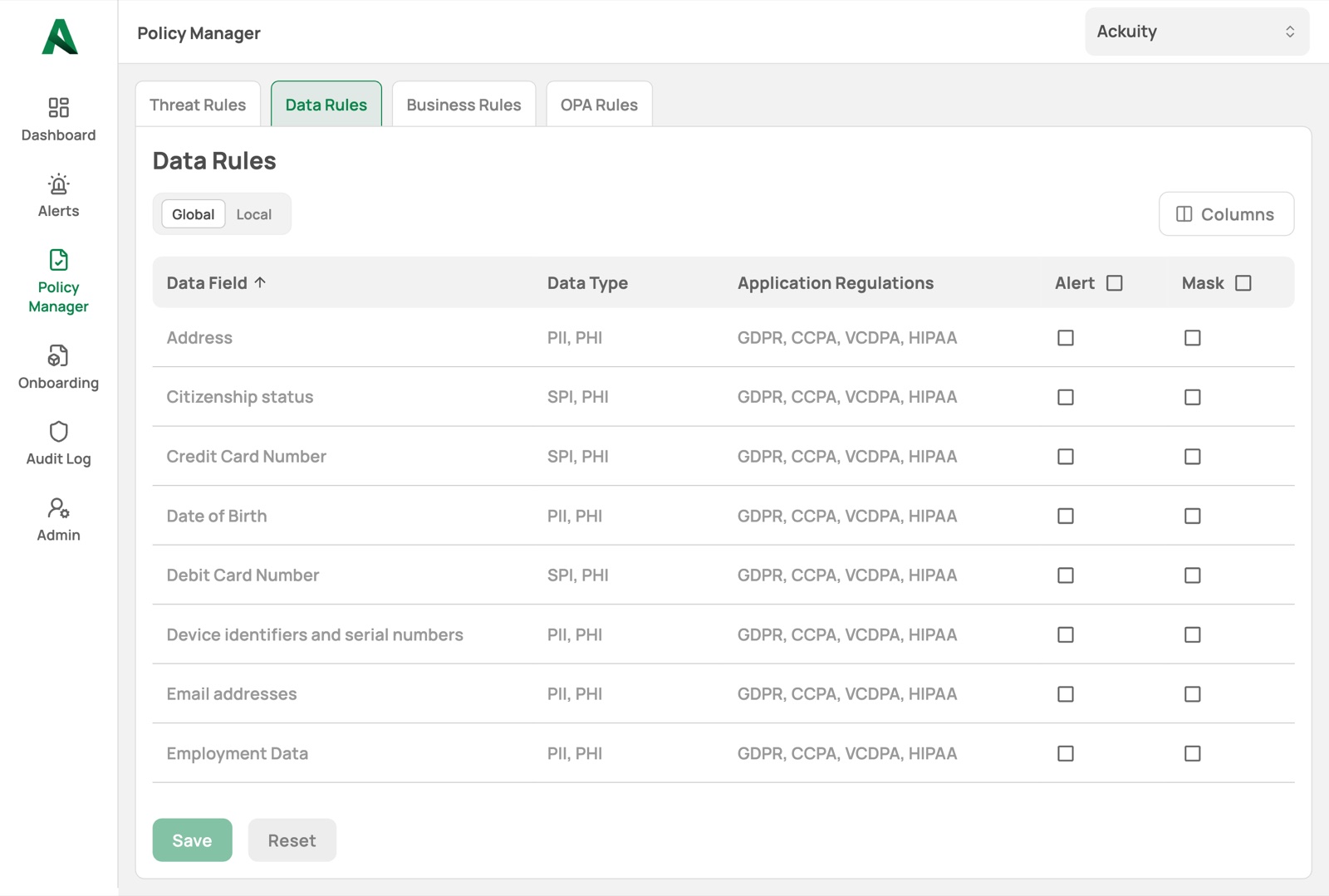
YOUR QUESTIONS, ANSWERED
An employee may serve many customers, but a particular session is scoped to one customer and task. Broad access does not authorize every possible disclosure or account change.
Banking assistants may retrieve product and customer information and propose account actions. Review customer scope, sensitive fields and any additional approvals required for each action.
CONTINUE YOUR REVIEW
NEXT STEP
Review your environment and the controls your team needs. Begin with read-only discovery.